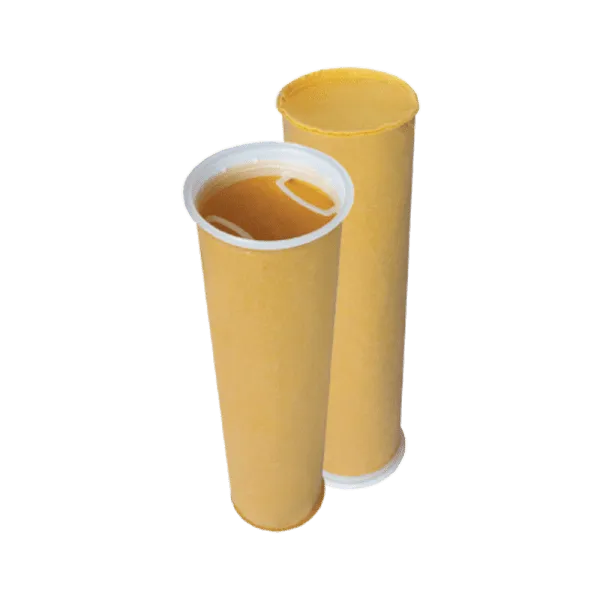
PE Phenolic Resin (PEPT)
Key Features
- Non-compressible layers for gels/high-vis fluids
- Internal capture for cleaner, faster changeouts
- Fits standard P1/P2 housings
Overview
Nominal-rated phenolic-infused polyester felt bags use a non-compressible depth matrix for gels/high-vis fluids; the optional double layer adds area and slows dP rise, with a positive-seal flange/disc bottom for standard P1/P2 baskets
How It Works
Inside-to-outside flow through a basket-supported bag. Phenolic-infused, non-compressible PET felt provides gradient-depth capture.
Applications
- •High-viscosity and gel-laden fluids: adhesives, sealants, coatings, inks
- •Resins/polymers: epoxies, urethanes, acrylics, alkyds
- •Petroleum/heavy liquids: asphalt, crude, lube/hydraulic oils, waxes/greases
- •Process/water-based streams: antifreeze, cooling-tower water, completion fluids, saline
- •Other: animal oils, elastomers, plasticizers, glycerine, turpentine, tung/rapeseed oils, cosmolene
FAQs
- •
What makes PEPT bags suitable for gel and viscous fluid filtration?
PEPT uses phenolic resin-infused polyester felt that creates a non-compressible depth matrix, preventing the channeling and media collapse that occurs with standard bags when filtering gels and high-viscosity fluids.
- •
What fluids are compatible with PEPT bags?
PEPT is compatible with adhesives, sealants, coatings, inks, epoxies, urethanes, acrylics, alkyds, asphalt, crude oil, lube oils, waxes, greases, antifreeze, and many petroleum-based fluids up to 275°F.
- •
What is the advantage of double-layer PEPT bags?
Double-layer PEPT bags provide additional surface area and slower pressure drop rise, extending service life in applications with high solids loading.
Physical Specifications
Media Specifications
Housing Compatibility
Competitor Cross-Reference
Build Your Model Code
PEPT-___-___-___-___PEPT-SL-3-2-PS